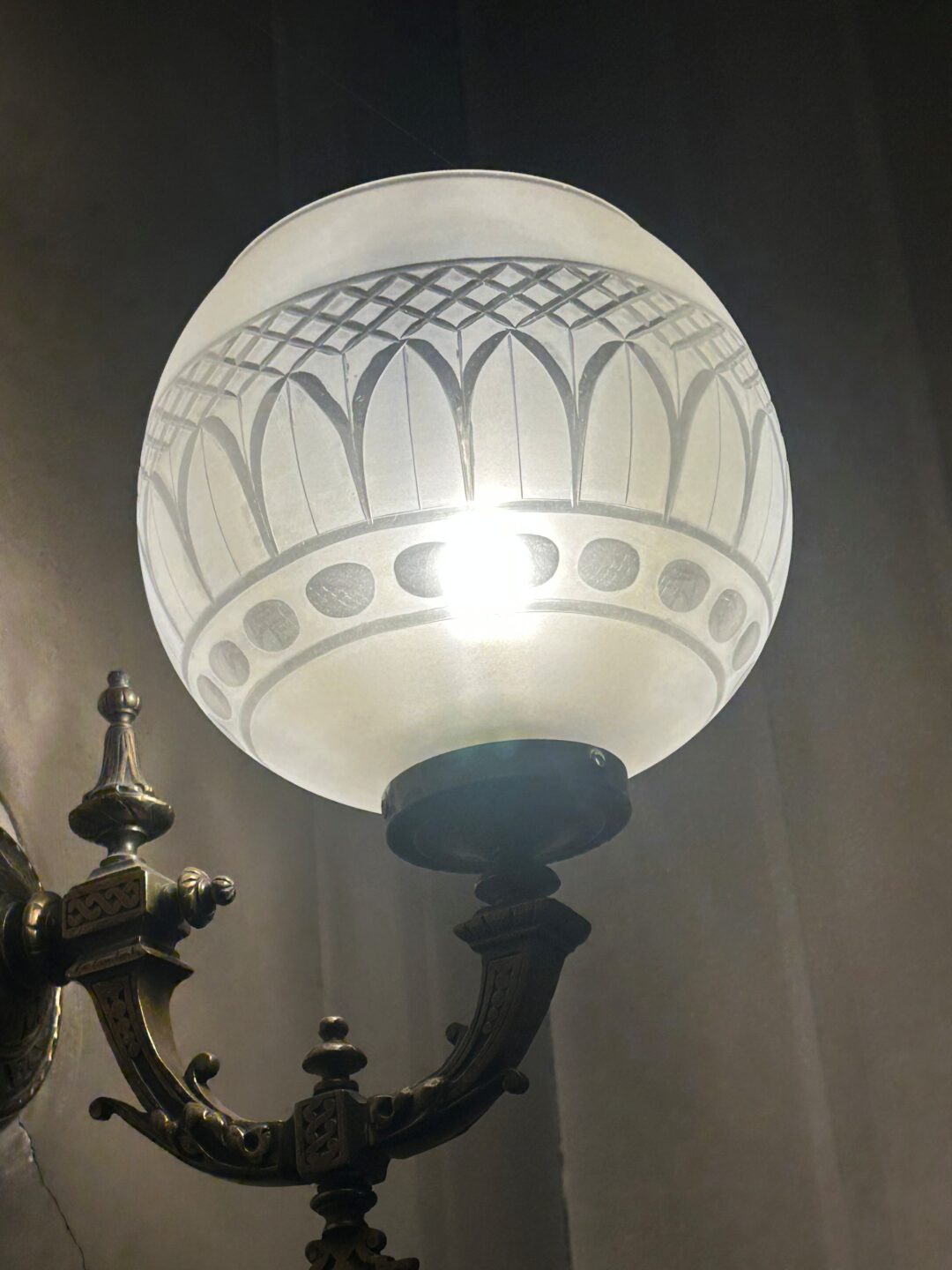
Etched Glass in the Victoria Mansion: The History of Specialized Glassware, Windows, and Globes in the Victoria Mansion.
April 14, 2026
Glass History and its Uses in the Museum.
Among the ornate decorations that greet visitors to the Victoria Mansion, some of the brightest are the marvelous gasoliers in each room of the house. On these gasoliers are etched glass globes that contain a range of impressive designs.
Other places this glass can be seen are on the stairway skylight and some doors in the house; each piece is from a different era in the mansion’s history and has been extensively researched by former mansion curator Arlene Palmer Schwind.
Glass and etched glass as a form of art have a very long and unique history. Primarily made from sand, soda ash, and limestone, it can be pressed into molds which are known as plates, or it can be hand-blown into specific shapes. Plate glass has been found as early as about 2500 BC in Egypt, and hand-blown glass is known to have originated in the 1st century in Syria. In 1771 the first etched glass was made by Swedish chemist Wilhelm Scheele using hydrofluoric acid. Later in 1857, acid etching would see commercial success by the English glass company Richardson & Sons. Hand etching, the process of using paraffin wax and scratching designs into the glass, then applying acid, was popular to further embed the design. Colored glass is made with certain additives; green is achieved with iron, blue with lime soda, and orange or red with cadmium selenide, a particularly rare compound.
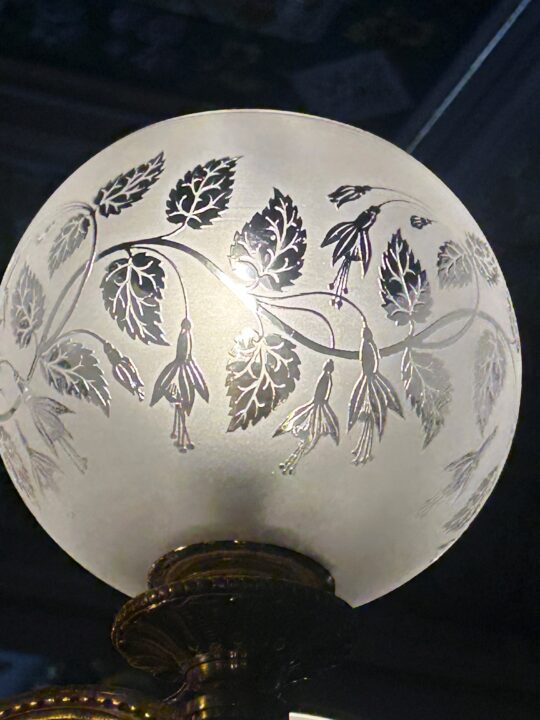
The Reception Room: The gasoliers and accompanying globes are from the original owners, the Morses. The globes are hand blown with acid etched bell flowers. (Image of Reception Room globe)
The Parlor: Like the Reception Room, these globes are original to the Morse family and hand blown. The rose design was made with a copper wheel engraver instead of being acid etched. (Image of Parlor globe)
Engraving was done in the 16th and 17th centuries in places like Denmark with a diamond tipped engraver, later this would also be done with a copper wheel as seen in the Parlor globes. Glass used for engraving will often have strengthening materials in the glass like lead oxide, potassium carbonate, and silica. This makes the production and cost of engraved glass much more expensive than acid etched. (Image of Parlor globes) 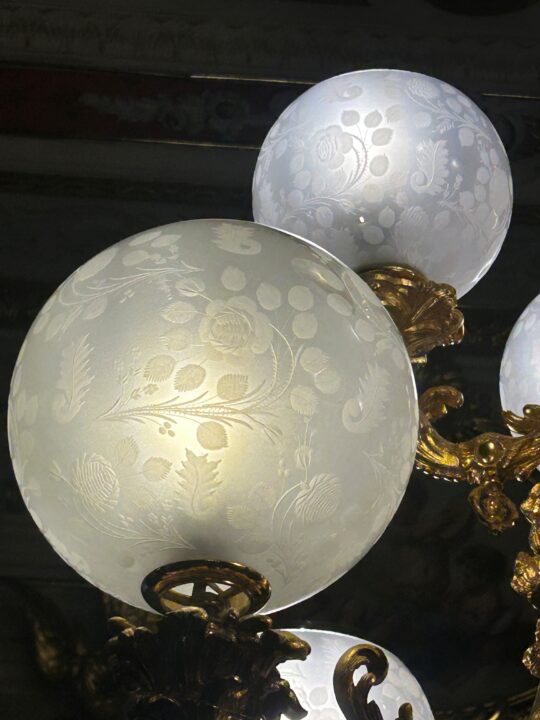
The Library: These globes are from the second family to own the house, the Libbys. They are acid etched with various scenes and designs including a hunting landscape, a nature/bird landscape, farms and homesteading, and sailboats and ocean scenery. (Image of Library globes) 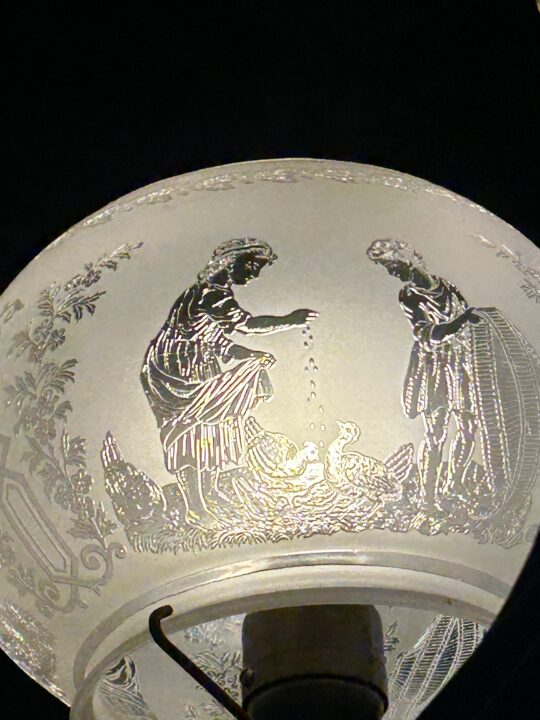
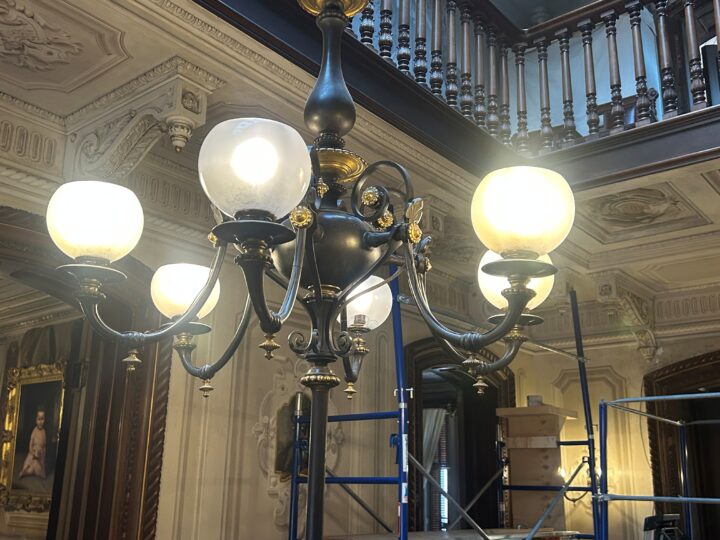
The Stair Hall: The double gasoliers hanging by the staircase are acid etched on the interior to achieve a frosted look. (Image of stair hall globes)
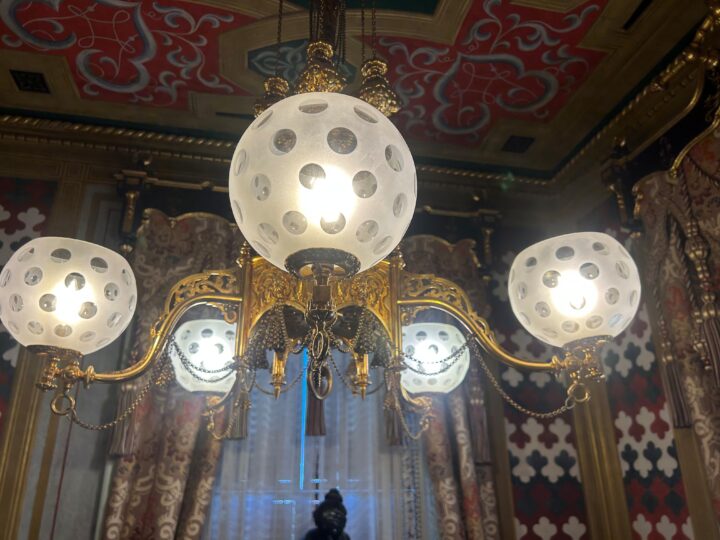
The Turkish Smoking Room: The globes in the Turkish Smoking Room are from the Morse era and are hand blown with circular cuts in a frosted interior. Uniquely these globes are the only ones signed by their manufacturer, that being Winfield of Burmingham, England. (Image of Turkish Smoking Room globes)
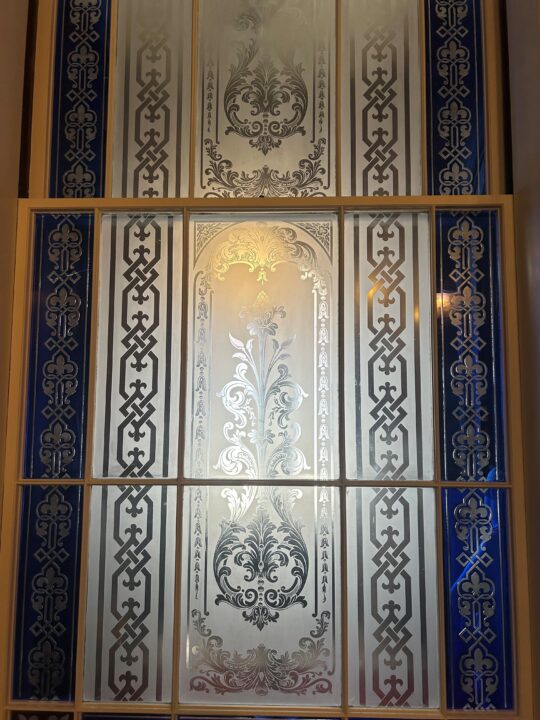
The Vestibule and Reception Room Doors: The Vestibule doors are Morse era, and The Reception Room doors are as well with partial recreation having been performed; both have intricate acid etched designs with painted side panels. (Image of doors)
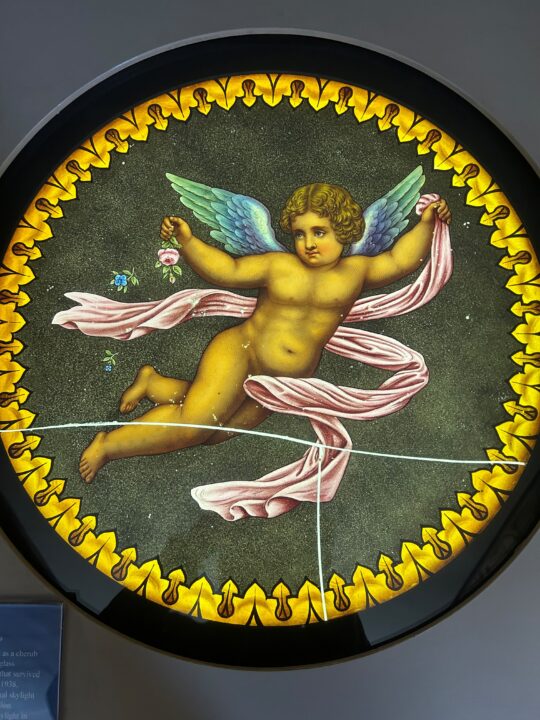
The Stained-Glass Skylight: The skylight uses both hand painted and acid etched designs; it was inspired by the skylight at Tremont House in Boston where Morse was likely employed. The Skylight was fully restored in 1999-2001. (Image of skylight)
The Landing Stained-Glass Window: The Morse era designs contain the state seals of Louisiana and Maine, referencing the families’ deep connections to both states. It is colored glass with acid-etched, hand-drawn, and stenciled designs. The manufacturer and origin are not known, though stained glass has been made in New England since the late 1820s. (Image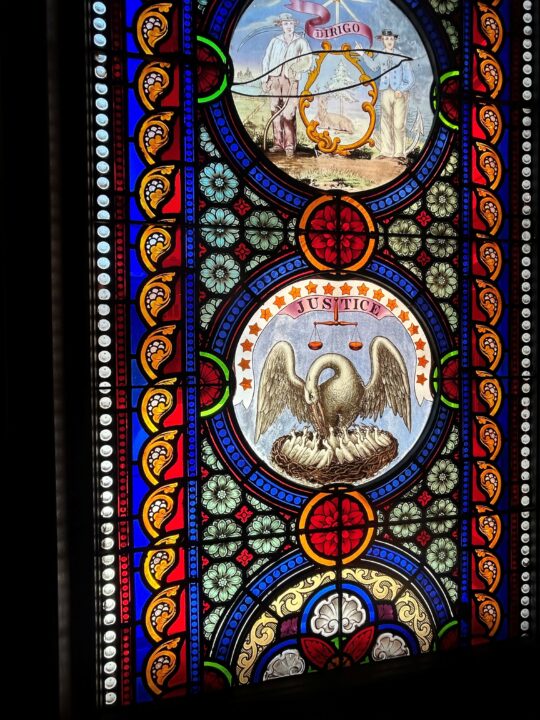 of stained-glass window)
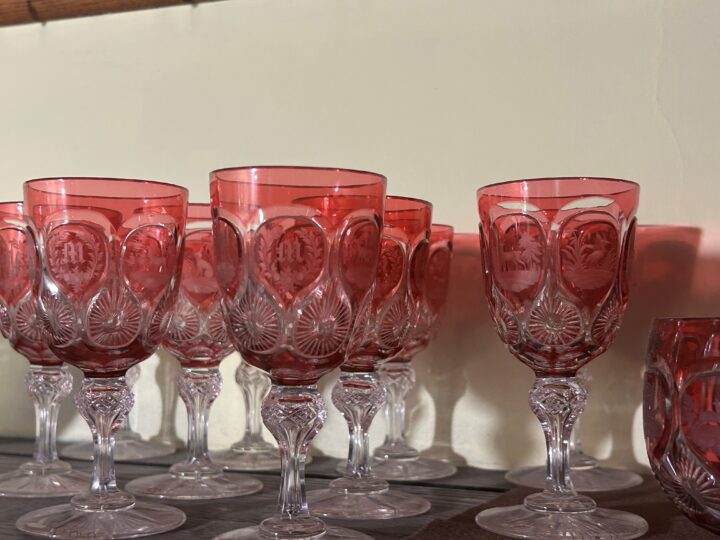
The Dining Room Glassware: Original to the Morse era, this glassware is blown, cut, and wheel engraved in the Bohemian style by the New England Glass Company in East Cambridge Massachusetts between 1858-1860. The glasses have various designs and vignettes like the globes from the library, depicting animals, deer, rabbits, and dogs. The designs are overlayed on ovals that are either colorless or thinly covered with red glass; these are intended for white wine. (Image of glassware)
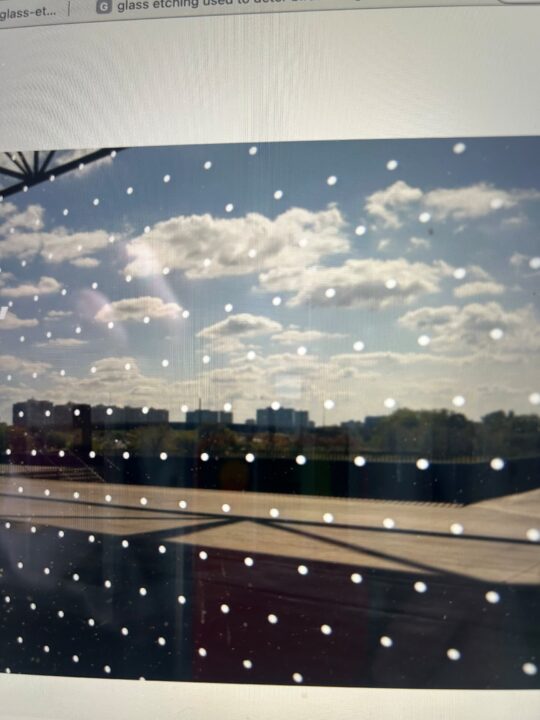
Etched glass and its modern uses: the market for decorated glass is still in demand for its beauty and in historical recreations. Other uses for etched glass in the 21st century are on high-rise buildings where large glass windows can be lethal for migratory birds. Etching simple shapes or designs on the windows allows them to be visible, letting the birds avoid them. Organizations like Audubon are leading figures in this effort to protect migratory birds.
Preserving a fragile and beautiful history.
Providing a figurative window into the history of the Victoria Mansion, it has been the effort of our amazing conservation team that the glass windows, skylights, and globes are well-maintained and part of the long history of this museum.
Thank you to docent Katherine Brown for compiling this information and intern Ethan Wolfe for editing this blog.
Related News
Subscribe to Our Newsletter
Join our e-newsletter list and/or mailing list to stay up-to-date on the latest Mansion news and events!